Showing posts with label Make Your Own. Show all posts

Wednesday, August 7, 2013

Truffula Tree Tutorial


 I was asked to make these Truffula Trees as decorations for our ward's girl's camp - as their theme was "Oh, the Places You'll Go" from Dr. Seuss.

There were a couple of challenges here: I needed to make them as cheaply as possible and they were supposed to be outside, so I figured they needed to be semi-weather proof.


These two requirements ruled out some of the options for the top part of the tree that I had found online (feathers and tissue paper, for example).

I suppose the idea I ended up with came from piñatas. I wanted to have something with movement but couldn't figure out how to do it! And then I thought about piñatas and how the tissue paper is cut for the store bought ones. It makes them fluffy. It makes movement. How would I do that? How could I make something like that without using tissue paper?

Figuring it out was a true "Aha!" moment, and here's how I did it:

For the Paper Mache Tree Top:

~ Flour
~ Water
~ Lots of Newspaper
~ 17 Inch Balloon

Who gets the newspaper anymore, right? I certainly don't! I got mine (and I needed A LOT, because I made 10 of these things) from friends in my ward and a trip to the recycle bin by the mailboxes for some good 'ol fashioned recycle bin divin'. The community papers that everyone gets (and no one reads) were perfect! And abundant! Though the weekly ads also sufficed. Stay away from ads where the paper is super shiny. That paper won't work! Plain newspaper works best.

I had to special order the 17 inch balloons. I needed something more rounded (and bigger) than the standard 12 inch balloons they sell at the store. I got the special outdoor display balloons (BargainBalloons.com) and they worked great! Though now I have 62 of them left. (I will never need to purchase big balloons ever, ever again.)

Paper Mache Glue Recipe:

~ One part Flour
~ Two Parts Water

My container was kind of small so for me this meant 1 Cup water and 1/2 Cup flour. A wire whisk works great to get all the lumps out.


Dip, remove excess glue by sliding the paper between two parallel fingers and apply to your balloon. It's super easy! And, surprisingly fun (though by the eighth one I was watching Doctor Who through Netflix on my iPhone to combat the monotony while I was working).


Paper Mache Tips:

~ Try to find a work space that stays at roughly the same temperature all the time. The air inside the balloon expands and contracts according to the room's temperature. It can crack your paper mache if the balloon expands or cause it to wrinkle if the balloon contracts.
~ Longer strips worked the best (8-10 inches)
~ You'll need to do 4 to 5 layers.
~ Alternate your strips between vertical and horizontal with each layer. It helps you keep track of what layer you're on.

Once you've completed your last layer and allowed your paper mache to dry thoroughly, deflate the balloon and pull it out through the hole. I cut the hole a little bit bigger with some scissors (only about a 1/4" or so).

Note: I had a couple of tree tops crumple when I deflated the balloons. There's no need to panic if that happens to you! Just gently pop the globe back out to the right shape (I used the PVC pipes I had on hand to do it since the hole was so small) and add another layer or two of paper mache on the weak spots to strengthen the structure of the globe.


For the Tree Fluff:

~ Plastic Tablecloth
~ Scissors
~ Hot Glue Gun & Lots of Glue


I got my plastic table cloths at Party City (they were 3 for $5 - score!). One table cloth will make two Truffula Trees (add that to your bank of useless knowledge).

Lay it out lengthwise on the floor, still folded the way it was in the package. You should have four 'layers' of plastic. You'll need to cut the folds on both sides by sliding your scissors between the layers (one side you'll cut through just one layer of plastic, the other side will be two) so that you have four separate layers when you're done.

Then cut the layers into strips about 2 to 2 1/2 inches in width. I was able to get five strips from each table cloth.

Fold your strips in half lengthwise, twice. Cut little strips along one side of the folded strip to a little beyond the midpoint of the strip. Continue cutting strips until you've reached the end.


The next step is to glue the frills to the paper mache globe.

The number one thing to remember here is that you want the plastic to lay flat!


You'll need your trusty scissors again to cut slits in  the plastic on the uncut side of the frill so you can make your straight frills fit your round object. I found that near the center, there is less need for this.

Just know that if you have puckers, that's when you know you need to cut a slit.


For the Trunk

~ 3/4" x approx 5' PVC Pipe
~ White, Yellow & Black Acrylic paint
~ Electrical tape


I tried spray painting these (didn't work!). Acrylic paint worked great though. 

I marked off the portions of the pipe I wouldn't need to paint - the bottom, which would be driven into the ground and the top, which would be inside the balloon. Then I did a layer or two of white paint over the writing on the pipes before painting the yellow. I still needed several layers to cover everything. Then I used black paint for the finishing touches.

Drive the short unpainted end of the PVC pipe into the ground and put the globe on top and you're done!


I really enjoyed doing this project after I figured out how I was going to do it. 

Making the fluffy tops was my favorite part!


From Instagram:


Wednesday, February 13, 2013

DIY Valentines


We usually don't do anything for Valentine's day, but this year we were invited to a Valentine's Day party (!), so I decided to step outside my comfort zone and make some Valentines!

Madeline and I combed over my Valentine's day Pinterest board and she wanted glowsticks! (What kid doesn't, right?)

There were a couple of examples of the ones with a 'heart' - I decided to make my own in Inkscape (you can have a generic one for free HERE). Some scissors, two hole punches and a glowstick later - voilà, homemade valentines!


For Evie's, I came up with something of my very own! Since I usually don't have good paper-craft ideas, I was very excited about this.

All you need is a balloon and a piece of ribbon. One hole punch at the bottom and pull the opening of the balloon through the hole and tie the ribbon around it.


You're probably wondering, "Why Green?!? It's Valentine's Day!" Well, I just happen to have green and white balloons for a little someone's upcoming birthday party and I'm too lazy to go get different ones....

Besides, green's awesome, if you didn't already know.


All that matters is that my baby likes 'em, right? This face says it all.....I think...


The best part? I have printables for this one, too! In many colors! 

Happy Valentine's Day!


 Free Balloon Valentine Printables: Green, Blue, Purple, Yellow, Orange, & Red.

Thursday, January 10, 2013

Wheelchair Bag Tutorial


We made these wheelchair bags to take with us for our Activity Days trip to the Pocopson home in December.

Here's a quick tutorial!

What you'll need:

~ A sheet of 8 1/2 x 11 inch paper (This will be your template)
~ Approx. 1/3 yd of Main fabric
~ Approx. 1/3 yd of Lining fabric
~ Thread
~ Sewing machine
~ Scissors

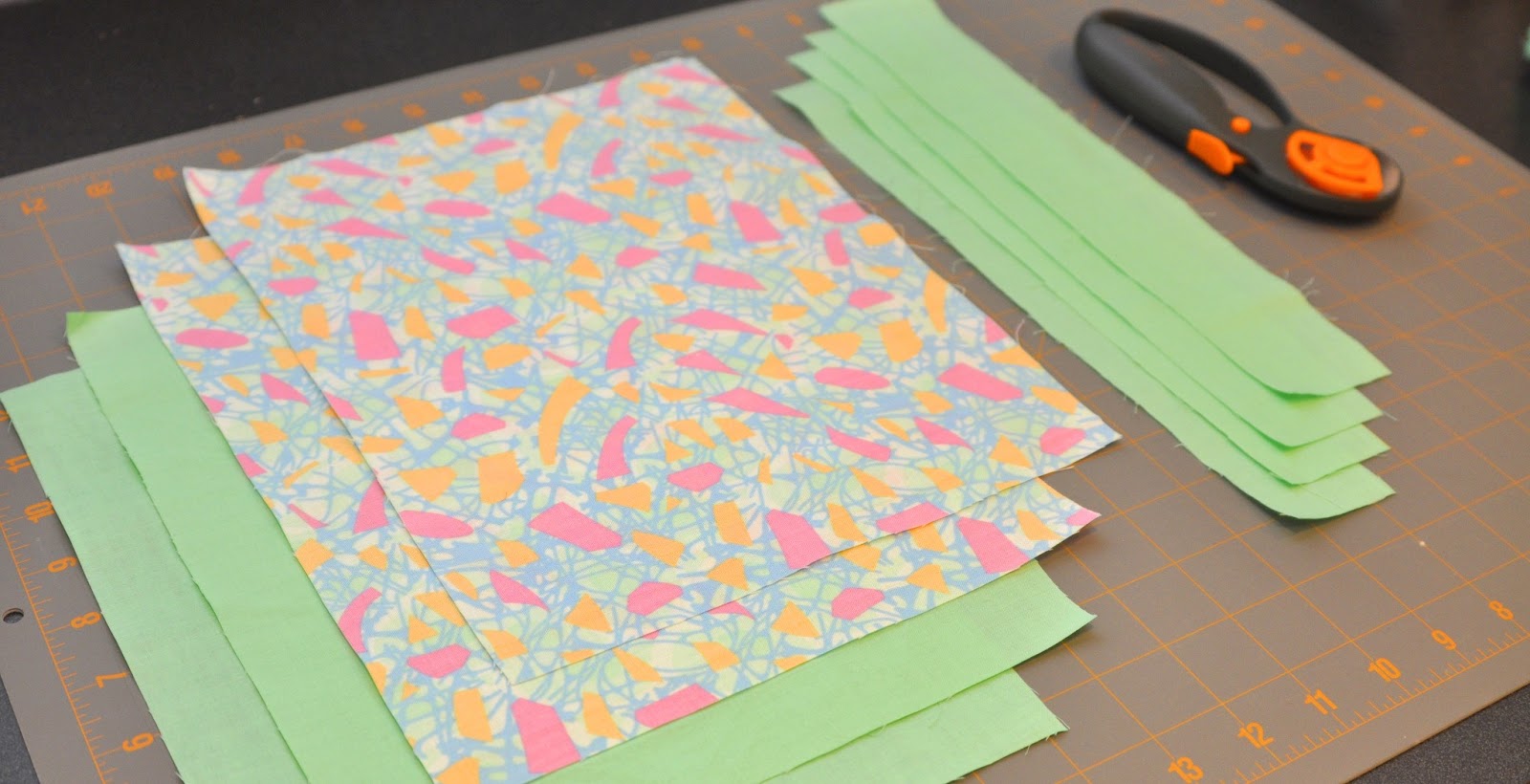
Step 1: Using the sheet of paper as a template, cut out two rectangles from your main fabric and two rectangles from the lining fabric.


(This fabric reminds me of the 90's......)


Step 2: From the remaining fabric (main or lining) cut four strips 2 inches wide x 12 inches long.


Step 3: Straps - Fold fabric strips lengthwise with right sides together.


Starting at the folded side of one end, sew across and down the strip of fabric with a 3/8 inch seam allowance. 


Clip corners and turn inside out. (I used a wooden chopstick for this step...It was a perfect tool.)


Press straps.


 Step 4: Bag - with right sides together, starting with a short side, sew three sides of the rectangle using a 1/2 inch seam allowance. Repeat with the lining fabric.


Press the seams flat near the opening of each pouch.


Clip corners.


Step 5: Turn the sewn lining fabric pouch right side out.


Insert it into the main fabric pouch. 


Sandwich and pin the straps between the main fabric pouch and lining pouch, two at each end. Make sure they're lined up with one another. The length of the strap should be tucked between the two layers. 


Sew around the edge of the bag with a 1/2 inch seam allowance, leaving a 1 inch opening for turning. I also back-stitched at the start and finish AND at each strap for reinforcement (optional, of course).


Step 6: Gently turn the bag inside out.


Stuff the lining inside the bag. Pin or press the edge around the bag opening. 


Sew 1/8 inch from the bag opening around to close the hole. 


Press.


(Demonstrating the bag's use on the girl's shopping cart....)


 Done!


Monday, June 18, 2012

Bassinet Mattress Tutorial


With my due date quickly approaching, I pulled our bassinet out of storage for reassembly.

I've been planning for some time to make a new mattress for the thing.....The one that came with it was just so.....pathetic.

With my last baby, I had added padding under the sheet but it was still woefully inadequate. I don't know how she slept on it. Hence my decision to make sure this baby wasn't sleeping on a wafer-thin abomination to mattresses everywhere.

I also decided I'd do a little tutorial!

What you'll need to make your very own Bassinet Crib Mattress:
 - Measuring tape
 - Foam by the yard
 - 3/4 yrd vinyl
 - Sewing machine
 - Matching thread

Step 1: Measure your bassinet.
My bassinet dimensions turned out to be 30 in by 15 in. You'll need this measurement to determine the amount of foam you'll need.

I got my foam by the yard at Joann's during their Memorial Day sale - it was all 50% off. Since the thickness I choose (which is 1 1/2 inches, by the way) was $30.99 /yd normally, I was eager to get a deal.

Step 2: Cut your foam to fit snugly into the bassinet.
I initially cut the foam to 30 in x 15 in, knowing that I would need to trim it down a little to fit. I then set the foam on top of the bassinet and used a Sharpie to mark where I needed to round the corners and/or cut off a little foam. The final dimensions were 30 in x 14 1/2 in.


Again, make sure the fit in the bassinet is snug. Safety first(!) when it comes to the kids!


Step 3: Pin your vinyl around the foam.
Place your foam on a single layer of vinyl (vinyl is located in the 'utility' fabrics area of your local craft store - available in many colors). Make sure you have a buffer around the outside of the foam - 2 or 3 inches is sufficient.


Fold the vinyl over the foam, tightening the vinyl against the foam on the folded side (creating a vinyl-foam ...taco?).


Pin the top layer of vinyl to the bottom layer of vinyl around the foam. Try to get your pins as close to the foam as possible for a tight fit.


Cut off the excess vinyl.


Step 4: Sew around the foam.
Top-stitch around the three open sides, as close to the foam as you can get. You may need to squish the foam down a bit as you go.


Note: If you're wondering why I only pinned/sewed three sides here, the reason is that I am inherently lazy and cheap. The less work I have to do and the least amount of materials I have to use, the better. You could, indeed, pin/sew all the way around (you masochist, you).

Step 5: Make vinyl binding.
You'll need to make some binding to hide your raw edges. Cut 2 inch strips from your leftover vinyl - enough to cover all your edges. 

If you need to sew several strips together, here's how to do it:

Place the two pieces perpendicular to each other at their ends. Sew across the two pieces at a diagonal.


Cut off the excess.


Fold open. Repeat if needed.


When you've got a strip of vinyl sufficiently long for your needs, fold it in half lengthwise. Unlike fabric, vinyl won't stay folded so you'll need to pin it to make it stay - do NOT iron! Vinyl is plastic, afterall - it will melt.


Fold the raw edges in to the center fold and pin. (Incidentally, this is the same method you'd use to make normal fabric binding.)


Step 6: Pin the binding to the raw edges.
Cut off the raw edges of the vinyl around the mattress to 1/2 an inch.


Fold down the end of your binding.


Apply the binding to the raw edges of the vinyl and pin.


Top-stitch around, back-stitching at the beginning and end. Again, try to keep the vinyl tight around the foam. Sew within a 1/4 inch of the edge of the binding.


And voila! You're done!

Behold! My new awesome mattress versus the old, wussy mattress:


The final product installed. Now all I need are some new sheets!