Tuesday, February 5, 2013

Changing Table Refinish

This was our changing table (I had clearly already begun sanding it and then thought 'I should take a before picture...'):


We got it before my first child was born over five years ago.

It's been banged up. The drawers weren't working properly. It was an ugly color. Need I say more?

I found this tutorial on Pinterest about repainting furniture and used it as a guide.

But there were other problems with this dresser that had to be addressed first.

The first thing I did was replace all the drawer sliders for the three big drawers (Lowes).

Then I had to sand everything. The primer I got said you didn't have to sand it, but I did anyway, just to be sure the paint would stick. And since we were using the darn thing at the same time I was doing the refinish, I had to reassemble the dresser as I finished each piece. Needless to say, I'm an expert at taking this thing apart and reassembling....

The next step was the primer - Zinsser 1-2-3 Water-Base Primer is what I used.

Then the paint - Baer - Gem Turquoise 500B-4. I wanted blue but not BOY blue. PS - I love this color.

Then the finish - Minwax Polycrylic.

And finally (finally!) I was done (with a month left in my pregnancy to spare).

We've been enjoying this lovely refurbished changing table for over seven months now! (has it really been that long? Wow.)


Thursday, January 24, 2013

Baklava


If you're looking for delicious holiday treat that only uses a pound of butter, then I have the perfect thing for you!

When the Husband first requested this a couple of years ago for a Christmastime treat, I asked my Mother-in-law what recipe she uses (this was a childhood favorite of my husband). She sent me a link to a recipe by Michael Symon - except(!), she uses a different recipe for the syrup - both of which are found below. I've made this with both walnuts and pistachios - pistachios are my favorite!

Enjoy!

Baklava

(Baklava recipe by Michael Symon. Baklava syrup recipe by Kathy Crapo)


Ingredients

For the Baklava:

  • 1 pound pistachios and/or walnuts, coarsely ground, plus more for garnish
  • 1/2 teaspoon ground cinnamon, or to taste
  • 1 cup ground zwieback crackers or breadcrumbs
  • 4 sticks unsalted butter, melted
  • 40 or so sheets of Phyllo dough (thawed, if frozen)

For Baklava Syrup:

  • 1/3 Cup Honey
  • 1 Cup Water
  • 1 1/2 Cups Sugar
  • 1 Tbsp Lemon Juice
  • Dash of Vanilla
  • Pinch of Salt

Directions

Position a rack in the lower third of the oven; preheat to 350 degrees F. Combine the nuts, cinnamon and ground crackers in a bowl.

Brush a 9-by-13-inch baking dish with some of the butter. Layer 14 pieces of phyllo in the dish, brushing each piece with butter before adding the next (keep the remaining dough covered with a damp towel). Sprinkle a quarter of the nut mixture over the dough (about 1 Cup). Layer 5 pieces of phyllo on top, brushing each with butter before adding the next; sprinkle with another quarter of the nut mixture. Add 5 more phyllo pieces on top, brushing each with butter, then add another quarter of the nut mixture, 5 more pieces of phyllo with butter, and the remaining nuts.

Layer the remaining 11 pieces of phyllo on top of the nuts, brushing each with butter; brush the top piece with extra butter. Cut into the baklava to make strips, about 1 1/2 inches wide. Then make diagonal slices, about 1 1/2 inches apart, to create a diamond pattern. Bake until golden, about 1 hour.

Bring the sugar, honey and water to a boil and cook, 10 to 15 minutes. Add the lemon juice, vanilla and salt and boil 2 more minutes, then let cool slightly.

Pour the syrup over the warm baklava; let soak, uncovered, at least 6 hours or overnight. Garnish with nuts.

Thursday, January 10, 2013

Wheelchair Bag Tutorial


We made these wheelchair bags to take with us for our Activity Days trip to the Pocopson home in December.

Here's a quick tutorial!

What you'll need:

~ A sheet of 8 1/2 x 11 inch paper (This will be your template)
~ Approx. 1/3 yd of Main fabric
~ Approx. 1/3 yd of Lining fabric
~ Thread
~ Sewing machine
~ Scissors

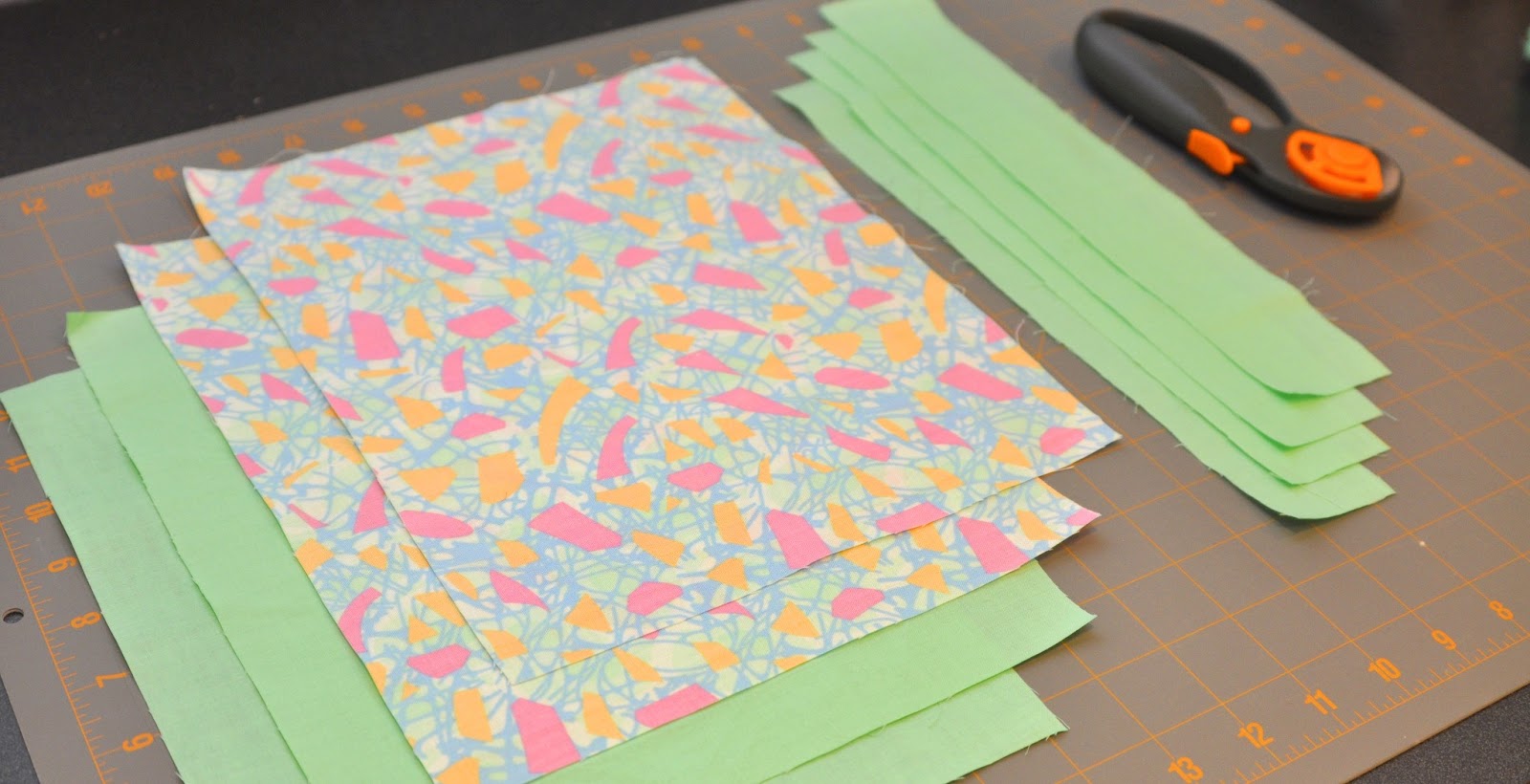
Step 1: Using the sheet of paper as a template, cut out two rectangles from your main fabric and two rectangles from the lining fabric.


(This fabric reminds me of the 90's......)


Step 2: From the remaining fabric (main or lining) cut four strips 2 inches wide x 12 inches long.


Step 3: Straps - Fold fabric strips lengthwise with right sides together.


Starting at the folded side of one end, sew across and down the strip of fabric with a 3/8 inch seam allowance. 


Clip corners and turn inside out. (I used a wooden chopstick for this step...It was a perfect tool.)


Press straps.


 Step 4: Bag - with right sides together, starting with a short side, sew three sides of the rectangle using a 1/2 inch seam allowance. Repeat with the lining fabric.


Press the seams flat near the opening of each pouch.


Clip corners.


Step 5: Turn the sewn lining fabric pouch right side out.


Insert it into the main fabric pouch. 


Sandwich and pin the straps between the main fabric pouch and lining pouch, two at each end. Make sure they're lined up with one another. The length of the strap should be tucked between the two layers. 


Sew around the edge of the bag with a 1/2 inch seam allowance, leaving a 1 inch opening for turning. I also back-stitched at the start and finish AND at each strap for reinforcement (optional, of course).


Step 6: Gently turn the bag inside out.


Stuff the lining inside the bag. Pin or press the edge around the bag opening. 


Sew 1/8 inch from the bag opening around to close the hole. 


Press.


(Demonstrating the bag's use on the girl's shopping cart....)


 Done!


Sunday, January 6, 2013

The Blessing Dress or How I Spent My Christmas Vacation


The Blessing Dress or How I Spent My Christmas Vacation

I know what you're thinking people: Stacy must be sitting on her hands doing nothing, nothing! Or dead. Whichever.

Not so!

I'm totally a lazy blogger though.

Taking pictures.

So much work.

Editing pictures.

So much more work.

Writing.....well, I have been doing that, but more on that later.

Until then, you can read about this lovely blessing dress I made last month...which was clearly not for me. I have a boy, people - who is six months old (can you believe that? No? Me either.).

Why did I agree to this? Well, the story is that back in May, my ward had a cake and service auction to raise money for the youth's summer programs. I made a cake (natch) and offered my services as a seamstress for a little girl. A friend of mine won my services but held off on taking me up on it, knowing that I had just had a baby and not wanting to take up too much of my time. It was always on my mind though and I felt like I just needed to fulfill that obligation ASAP.

I got a call from my friend in November. She said she had the perfect opportunity for me to perform my service - her sister was in need of blessing dress - the blessing was on December 30th.

I was going to spend December in my hometown in Oregon, where I wouldn't have much to do otherwise so I agreed.


My friend's sister directed me to this blog post about a blessing dress she thought was just what she was looking for - the skirt part anyway. That post referenced this tutorial.  The original post never says how the skirt was actually made, so I had to figure it out on my own. It turned out to be a bit more challenging than I had originally thought...

I drafted my own pattern for the bodice (which she wanted to be simple) using the measurements that I'd been given. This baby was premature so she was smaller than any of the patterns I had access to. I drafted my own pattern for the little sleeves as well (I use this tutorial), wanting to keep them light and airy, so I used the same chiffon I used for the ruffles. They were planning to have the baby wear a little sweater over the top of the dress and I wanted to cut down on fabric bulk (I used Taffeta for the bodice and skirt).

(Buttons, my arch nemesis.)


The ruffles were the most challenging aspect of the dress. There are twelve and each had to be hemmed all the way around. Easier said than done. I think the buttons are the scariest part to do, though - you mess those up and you've ruined the whole dress!

Overall, I think the project turned out well - and my friend's sister absolutely loved it!


 Did I mention that I had to make two? Yeah, I made two. Twin dresses for twin baby girls.


Monday, June 18, 2012

Bassinet Mattress Tutorial


With my due date quickly approaching, I pulled our bassinet out of storage for reassembly.

I've been planning for some time to make a new mattress for the thing.....The one that came with it was just so.....pathetic.

With my last baby, I had added padding under the sheet but it was still woefully inadequate. I don't know how she slept on it. Hence my decision to make sure this baby wasn't sleeping on a wafer-thin abomination to mattresses everywhere.

I also decided I'd do a little tutorial!

What you'll need to make your very own Bassinet Crib Mattress:
 - Measuring tape
 - Foam by the yard
 - 3/4 yrd vinyl
 - Sewing machine
 - Matching thread

Step 1: Measure your bassinet.
My bassinet dimensions turned out to be 30 in by 15 in. You'll need this measurement to determine the amount of foam you'll need.

I got my foam by the yard at Joann's during their Memorial Day sale - it was all 50% off. Since the thickness I choose (which is 1 1/2 inches, by the way) was $30.99 /yd normally, I was eager to get a deal.

Step 2: Cut your foam to fit snugly into the bassinet.
I initially cut the foam to 30 in x 15 in, knowing that I would need to trim it down a little to fit. I then set the foam on top of the bassinet and used a Sharpie to mark where I needed to round the corners and/or cut off a little foam. The final dimensions were 30 in x 14 1/2 in.


Again, make sure the fit in the bassinet is snug. Safety first(!) when it comes to the kids!


Step 3: Pin your vinyl around the foam.
Place your foam on a single layer of vinyl (vinyl is located in the 'utility' fabrics area of your local craft store - available in many colors). Make sure you have a buffer around the outside of the foam - 2 or 3 inches is sufficient.


Fold the vinyl over the foam, tightening the vinyl against the foam on the folded side (creating a vinyl-foam ...taco?).


Pin the top layer of vinyl to the bottom layer of vinyl around the foam. Try to get your pins as close to the foam as possible for a tight fit.


Cut off the excess vinyl.


Step 4: Sew around the foam.
Top-stitch around the three open sides, as close to the foam as you can get. You may need to squish the foam down a bit as you go.


Note: If you're wondering why I only pinned/sewed three sides here, the reason is that I am inherently lazy and cheap. The less work I have to do and the least amount of materials I have to use, the better. You could, indeed, pin/sew all the way around (you masochist, you).

Step 5: Make vinyl binding.
You'll need to make some binding to hide your raw edges. Cut 2 inch strips from your leftover vinyl - enough to cover all your edges. 

If you need to sew several strips together, here's how to do it:

Place the two pieces perpendicular to each other at their ends. Sew across the two pieces at a diagonal.


Cut off the excess.


Fold open. Repeat if needed.


When you've got a strip of vinyl sufficiently long for your needs, fold it in half lengthwise. Unlike fabric, vinyl won't stay folded so you'll need to pin it to make it stay - do NOT iron! Vinyl is plastic, afterall - it will melt.


Fold the raw edges in to the center fold and pin. (Incidentally, this is the same method you'd use to make normal fabric binding.)


Step 6: Pin the binding to the raw edges.
Cut off the raw edges of the vinyl around the mattress to 1/2 an inch.


Fold down the end of your binding.


Apply the binding to the raw edges of the vinyl and pin.


Top-stitch around, back-stitching at the beginning and end. Again, try to keep the vinyl tight around the foam. Sew within a 1/4 inch of the edge of the binding.


And voila! You're done!

Behold! My new awesome mattress versus the old, wussy mattress:


The final product installed. Now all I need are some new sheets!